Important Notice: Our phone and internet lines are currently down.
We apologise for the inconvenience and appreciate your patience while the issue is being resolved.

Cosmetic dentistry

Composite Bonding in Macquarie Fields

Composite bonding is a conservative cosmetic option used to refine chipped, worn, uneven or slightly spaced teeth using tooth-coloured resin. At Dental Art Clinic, we shape composite bonding by hand and match the shade to the adjacent teeth, blending it naturally with your smile. One of our dentists will assess your teeth first and discuss whether it is suitable for you.

What Is Composite Bonding?

Composite bonding, also called dental bonding or tooth bonding, is a cosmetic treatment in which a tooth-coloured resin is applied directly to a tooth, shaped by hand and set with a curing light. It belongs to the same family of material used for white fillings, applied here to alter the shape, edge or colour of a tooth rather than to fill a cavity.

We use dental bonding most often for chipped teeth, worn or uneven edges, small spaces between front teeth, and teeth that appear shorter or narrower than those beside them. Because the resin is added to the tooth, bonding may involve less alteration of natural tooth structure than some other cosmetic options, depending on the treatment required.

Bonding is not suitable for every situation. Where a tooth is heavily broken down, where there is decay or a failing restoration underneath, or where the bite is placing heavy force on the tooth, another treatment may be more appropriate. An assessment establishes which applies to you.
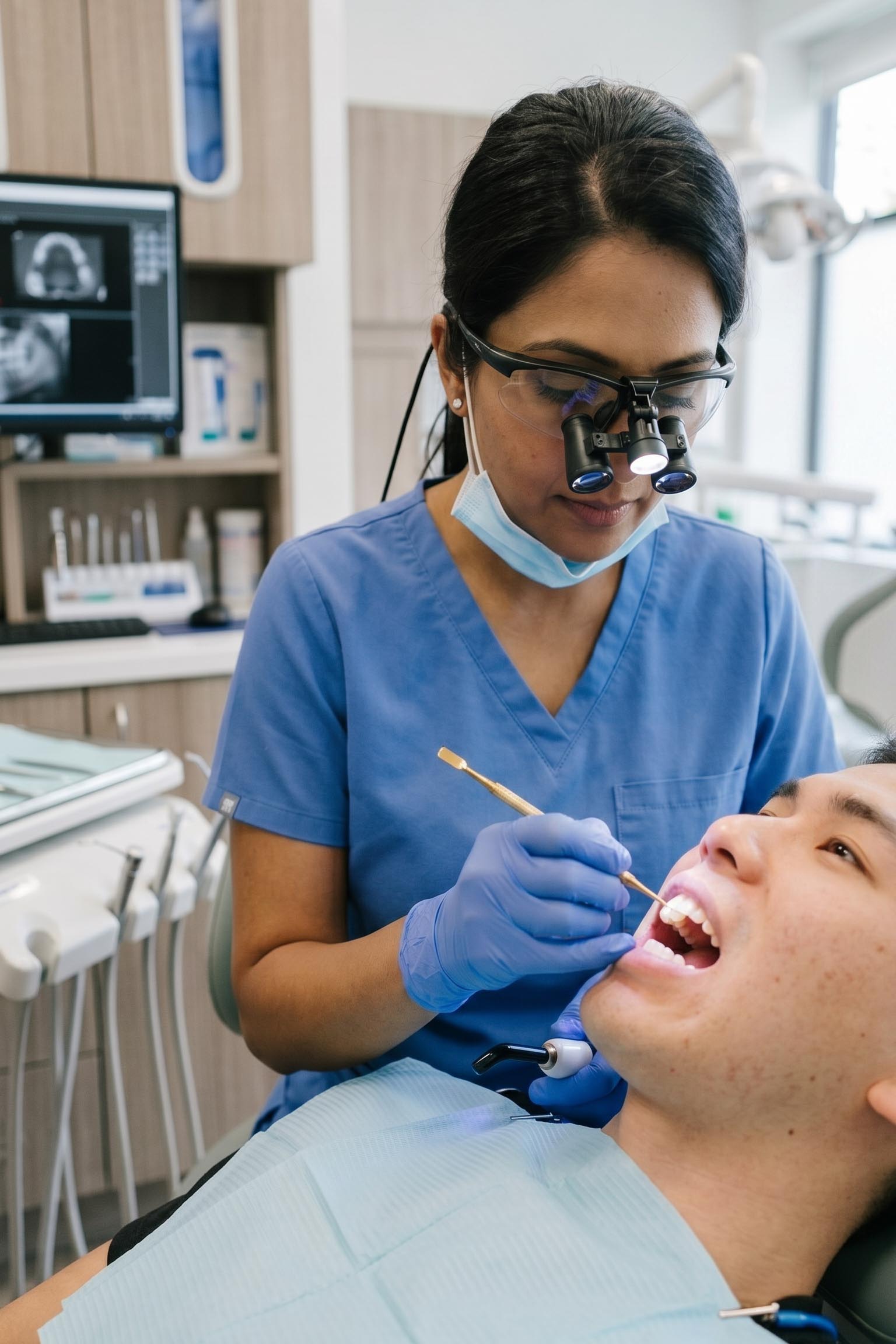
Why Patients Consider Cosmetic Dental Bonding

These are possibilities rather than guarantees. What can be achieved depends on your teeth, your gums and your bite,
and outcomes vary between individuals.

Shade matched to the teeth around it

The resin is selected to complement the neighbouring teeth, in daylight where practical.

Conservative in suitable cases

Because material is added rather than removed, less preparation of the natural tooth may be needed than with some alternatives.

Suited to small, targeted changes

Bonding is generally considered for localised concerns such as a chipped edge, a worn corner or a minor space.

Repairable in some circumstances

Worn or chipped composite may sometimes be repaired or refreshed rather than replaced in full.

Explained before anything begins

What bonding may achieve, what it will not, the alternatives and the fees are all set out before you decide.

The Composite Bonding Process at Dental Art Clinic

Treatment is planned around the tooth, the teeth beside it and the way your teeth meet.
Step 1
Consultation and Assessment
We examine the tooth and its neighbours, check for decay, cracks or gum concerns, and look at how your teeth meet when you bite. We discuss what you would like changed and give you a realistic picture of what bonding may and may not achieve. Anything requiring treatment first is explained before cosmetic work is considered.
Step 2
Planning and shade selection
Together we agree what is being refined. The shade of the composite resin is selected to complement the surrounding teeth.
Step 3
Placing and shaping the resin
The composite is applied directly to the tooth and shaped by hand, then set with a curing light. Whether local anaesthetic is needed depends on the tooth and the work involved, and we discuss this with you beforehand. If you feel anxious about dental treatment, please tell us so we can talk through options for keeping you comfortable.
Step 4
Finishing, bite check and review
The bonding is smoothed, polished and checked against your bite, then adjusted where needed. Before you leave we explain how to care for it and when we would like to review it. The number of appointments required is confirmed at your assessment.

Is composite bonding suitable for you?

Composite bonding is a cosmetic treatment and, like any dental treatment, it carries risks as well as benefits. It is not appropriate for everyone, and outcomes and treatment needs vary between individuals. Your dentist assesses the condition of the tooth and any existing restorations, decay or cracks, the health of your gums, how your teeth meet, and any signs of grinding or clenching.

Why Choose Dental Art Clinic

More than 40 years in
Macquarie Fields

We have been caring for generations of patients across Macquarie Fields and surrounding communities for more than 40 years.

An All-Female,
Multilingual Team

Our all-female team welcomes patients of all ages. With English, Hindi and Punjabi spoken, you can discuss your dental care in the language you feel most comfortable using.
Clear Treatment and Fee Information
We explain your recommended treatment, available options and associated costs before you decide whether to proceed.
Flexible Ways to Manage Treatment Costs
Payment plan options are available, subject to provider approval and terms. HICAPS also allows eligible patients to process private health fund claims at the practice.

Meet the Dentist
Caring for Your Smile

Dr Dal | Dentist
Dr Dal graduated from the University of Sydney in 2003 and joined Dental Art Clinic in 2004. As the practice’s principal dentist, she provides care for patients of all ages and takes a warm, gentle and considered approach to dentistry.
She takes the time to understand each patient’s concerns, explain the available treatment options and answer questions before care begins. Fluent in English, Punjabi and Hindi, Dr Dal helps patients communicate comfortably and make informed decisions about their dental care.

Composite Bonding Cost & Payment Options

At Dental Art Clinic, we provide clear information about your treatment and the associated costs.
Flexible payment plan options are also available to help you manage the cost of care.

Humm Finance
Hicaps
AfterPay
Zip Pay
ATO

Related treatments

Book a Composite Bonding Assessment

If a chipped, worn or uneven tooth has been on your mind, we are glad to take a look. Your assessment covers the condition of the tooth, whether composite bonding is suitable for it, the alternatives and the cost. There is no obligation to proceed.

Frequently Asked Questions (FAQs)

How much does composite bonding cost?
Costs vary depending on the number of teeth treated and the work required. We will provide a treatment plan and fee estimate following your assessment.
Yes. Tooth bonding, dental bonding and composite bonding all refer to tooth-coloured resin being applied and shaped directly onto a tooth.
For suitable patients, bonding may refine small chips, worn or uneven edges, minor gaps and differences in tooth shape or proportion.
Longevity varies according to your bite, oral habits and aftercare. Composite may stain, chip or wear over time and can eventually require maintenance or replacement.
Bonding generally involves adding resin to the tooth surface. Whether preparation or anaesthetic is required will depend on the tooth and the treatment planned.
Neither is universally better. Bonding and veneers address different concerns, so your dentist will assess your teeth, gums and bite before discussing suitable options.
Composite resin does not whiten like natural enamel. If you are considering teeth whitening, discuss it with your dentist before bonding so the treatments can be planned in the appropriate order.
Brush, floss and attend regular check-ups as recommended. Avoid biting hard objects with bonded teeth, and remember that coffee, tea, red wine and tobacco may stain the material over time.